Generate digital Maryland Architect stamps instantly
- STATE BOARD APPROVED
- HIGH-QUALITY FILES IN VARIOUS FORMATS
- INSTANT ACCESS
- FREE-OF-CHARGE REVISIONS
Your board-compliant seal will be ready for download after purchase
Board approved
Your Maryland Architect seal from pedigitalstamps.com meets every requirement on this page — the required wording and the layout set out in COMAR 09.21.02.03 (Sealing Requirements); Board seal design guidance. Fill in your details and download it in seconds.
COMAR 09.23.03.11, the citation usually given for the Maryland engineer seal, is "Failure to Respond" and has nothing to do with seals. The seal itself is COMAR 09.23.01.03, in the procedural regulations; signing and sealing is 09.23.03.09 and the titleblock is 09.23.03.10.
Full Maryland Architect seal requirements, with every citation →
File formats
HIGH-QUALITY RASTER FORMAT
VECTOR FORMAT, INFINITELY SCALABLE
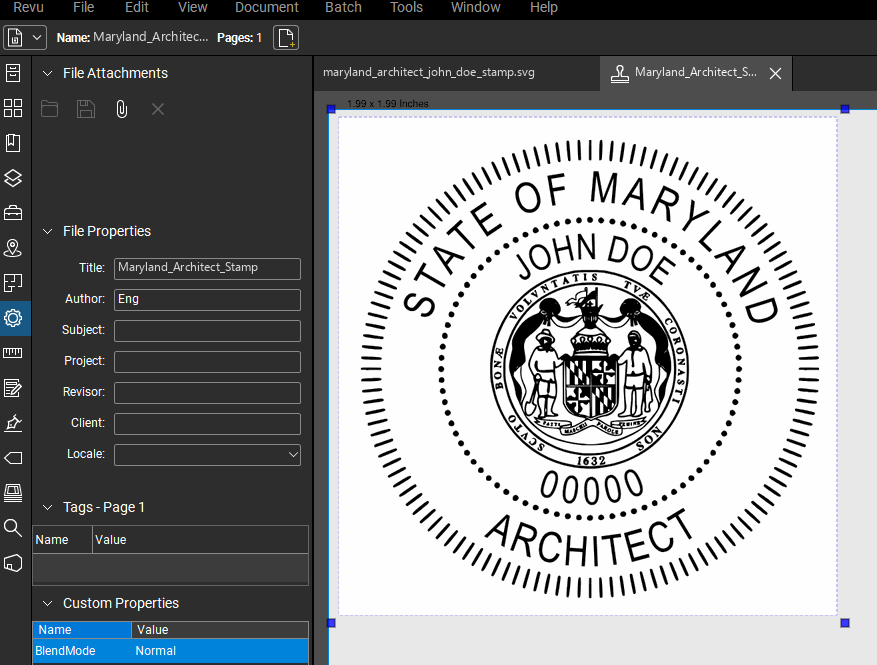
UNIVERSAL DOCUMENT FORMAT
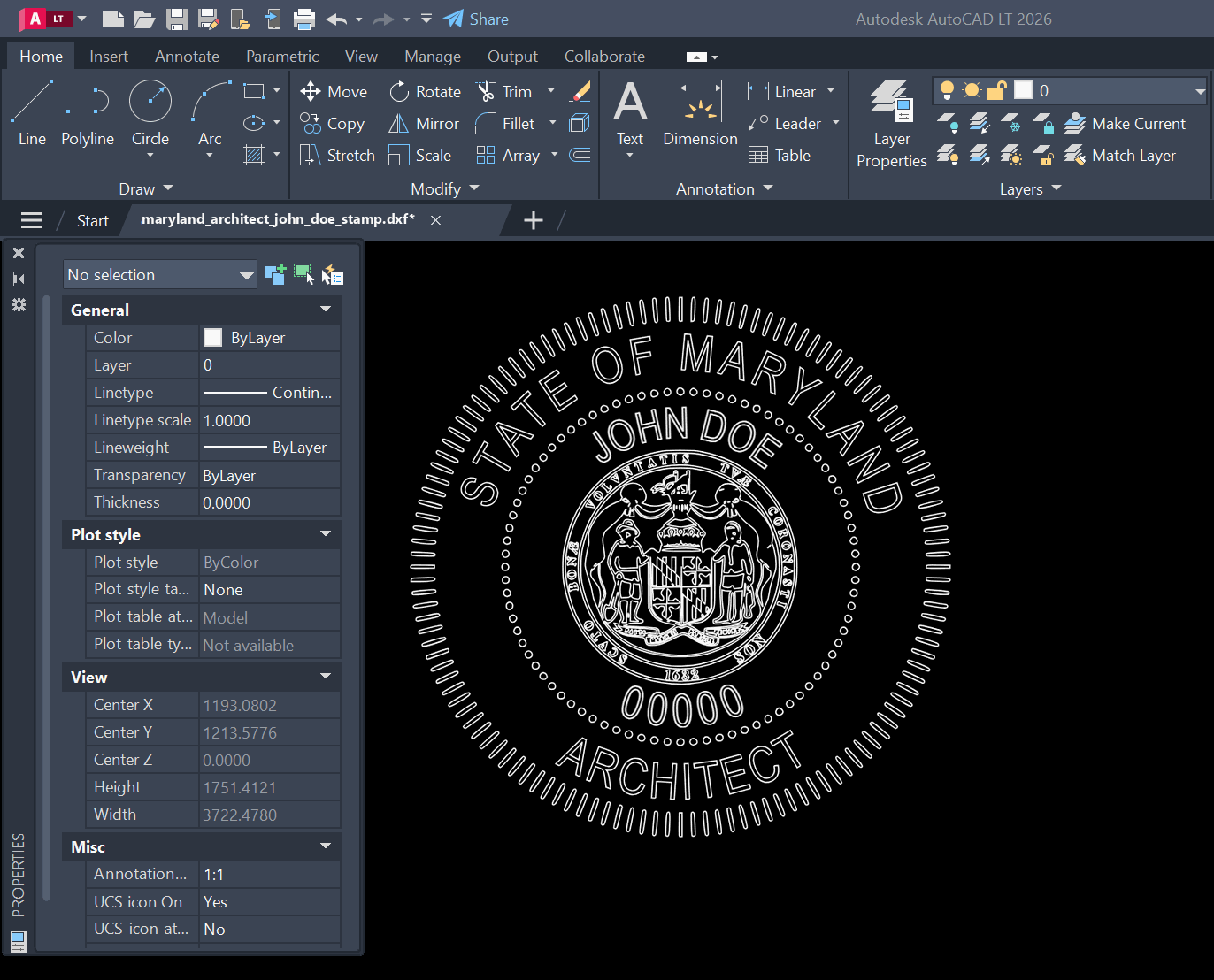
AUTOCAD COMPATIBLE FORMAT
PROFESSIONAL PRINT FORMAT
How it works
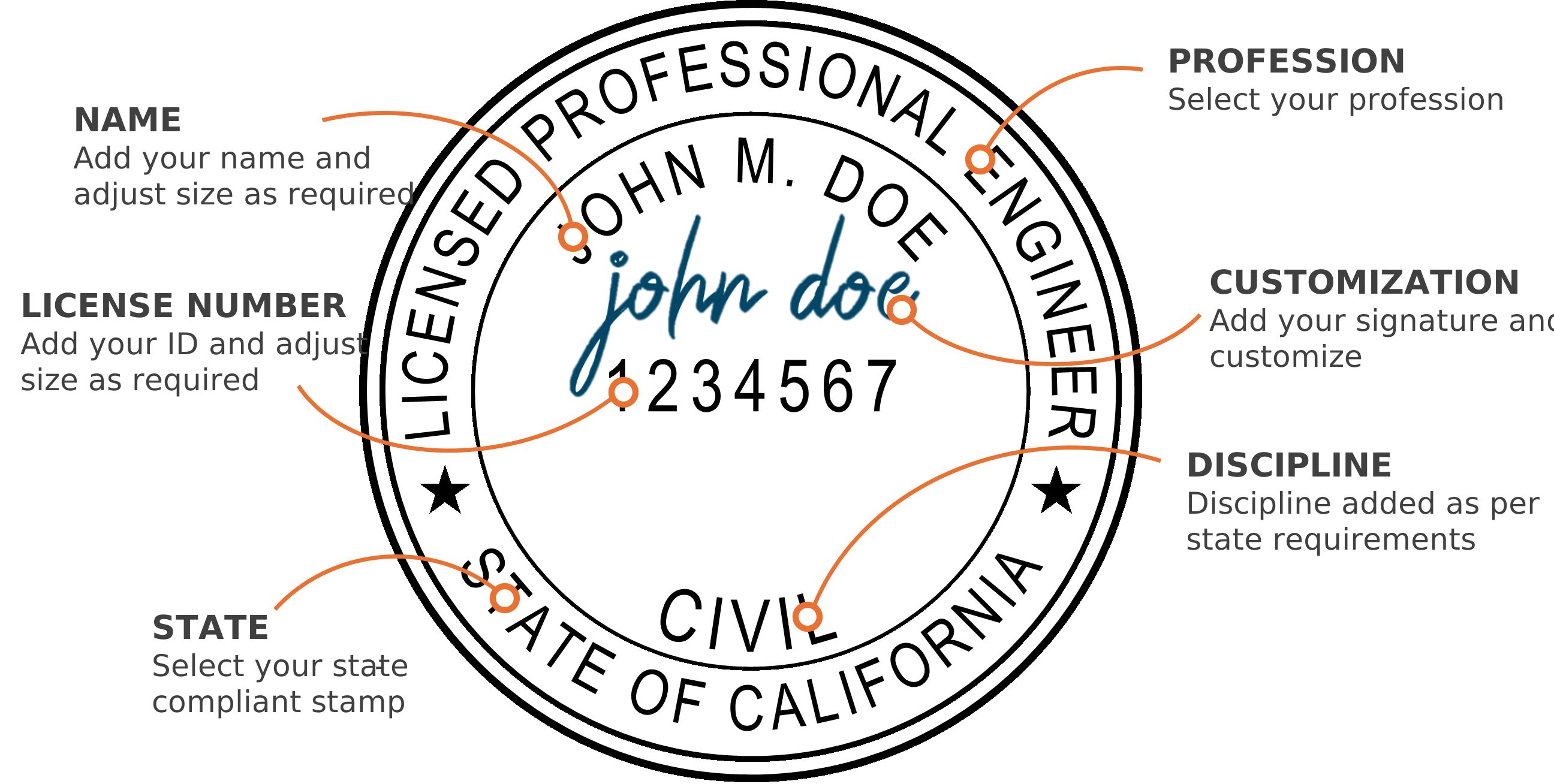
Select your state & profession
Add your name & license number
Adjust the text size using the controls
Select your discipline
Add your signature & customize (optional)
Download instantly to your computer
Software compatibility


Who we are
Our digital Maryland Architect stamp generator creates instant state-approved electronic architect stamps. Our platform provides full customization of your digital seal, including an option to add your signature. Professional Engineer (PE) stamps, Architect stamps, and Land Surveyor stamps are available for immediate download after customization. There is no waiting. Every electronic professional seal we generate is 100% compliant with state board requirements, ensuring your digital stamp meets all necessary standards.
State boards


FAQ
Frequently asked questions about Maryland digital architect stamps and seals.
Once you are licensed in Maryland, you can generate your seal here and download it immediately. Fill in the form and position your signature if you want one. The layout follows COMAR 09.21.02.03 (Sealing Requirements); Board seal design guidance, which is the provision the State Board of Architects will measure the seal against.
Maryland’s architect stamp rule is COMAR 09.21.02.03 (Sealing Requirements); Board seal design guidance, administered by the State Board of Architects, a different body from the engineering board. The seal must carry “Architect”, and neither COMAR nor the Board's seal page prescribes a diameter for the architect seal.
A further 4 requirements, each tied to the subsection that imposes it, are itemised in the Maryland requirements section on this page.
COMAR 09.21.02.03 (Sealing Requirements); Board seal design guidance governs the Maryland architect’s seal but does not prescribe a diameter. Sizes quoted for Maryland elsewhere generally come from stamp suppliers’ catalogues rather than from the rule. What the rule does require is that your name and license number stay clearly legible.
No. The word on the seal is "Architect", by itself. The State Board of Architects publishes the requirement as a seal consisting of the pictorial device of the Great Seal of Maryland as a center, surrounded by the words "State of Maryland" and "Architect" and the licensee's name and license number. Maryland licenses architects rather than registering them — the statute speaks of the licensed architect who prepared or approved the document — so neither "Registered Architect" nor "Licensed Architect" is the published legend. (Board seal guidance, labor.maryland.gov/license/arch/archseal.shtml; Md. Code, Bus. Occ. & Prof. § 3-501(a))
Yes, and it is the element most often missing from artwork sold for Maryland. The Board of Architects' Seal and Title Block Rules page requires the pictorial device of the Great Seal of Maryland at the center, surrounded by "State of Maryland" and "Architect" and the licensee's name and license number, and accepts an impression seal, a rubber stamp facsimile or a digital seal. Note where that language lives: COMAR 09.21.02.03, the regulation the Board's page points to and the section usually cited for the architect seal, is titled Sealing Requirements and covers competence, approval, signatures and digital signatures — it contains no seal-design language at all. (Board seal guidance, labor.maryland.gov/license/arch/archseal.shtml; COMAR 09.21.02.03)

No. Neither COMAR nor the Board of Architects' seal page states a diameter for the architect seal; the page prescribes the contents, names the acceptable forms, and stops. The 1-5/8 inch to 2 inch range quoted for Maryland is the State Board for Professional Engineers' own seal guidance for the engineer's seal — "not smaller than the commercially designated 1-5/8 inches and not larger than the commercially designated 2 inches" — and the architects' board has published nothing equivalent. (Board seal guidance, labor.maryland.gov/license/arch/archseal.shtml; State Board for Professional Engineers seal guidance)
Send it in view-only form. COMAR 09.21.02.03.F states that once the digital signature is applied to the document, the document shall be available in a View Format only if the document is to be transmitted electronically. That condition is peculiar to architects — the engineers' parallel regulation, COMAR 09.23.03.09, sets out digital-signature criteria but imposes no view-format restriction. The architect's digital signature must also contain identification unique to the licensee, be under the licensee's exclusive control, be verifiable, and be linked to the document so that any later modification means the document is no longer considered prepared or approved by the licensee. (COMAR 09.21.02.03.E and .F; COMAR 09.23.03.09)
A principal's, unless the firm designates someone else in writing. COMAR 09.21.02.04.C requires the entity's name in the titleblock and then requires the titleblock to contain a date, printed name, signature and seal of one of the directors of a corporation, general partners of a partnership, or members of a limited liability company who prepared or approved the documents. Paragraph .D lets those principals designate another employee of the entity to sign and seal instead, provided the designee is licensed in Maryland and prepared or approved the documents for that particular project. The engineers' titleblock rule asks only for the printed name of the engineering entity, so a firm that carries its engineering practice over to its architectural drawings will be short an element. (COMAR 09.21.02.04.C and .D; COMAR 09.23.03.10.B)